U.S. Navy Laser Weapon Shoots Down Drone in Test
Filed 21 July 2010
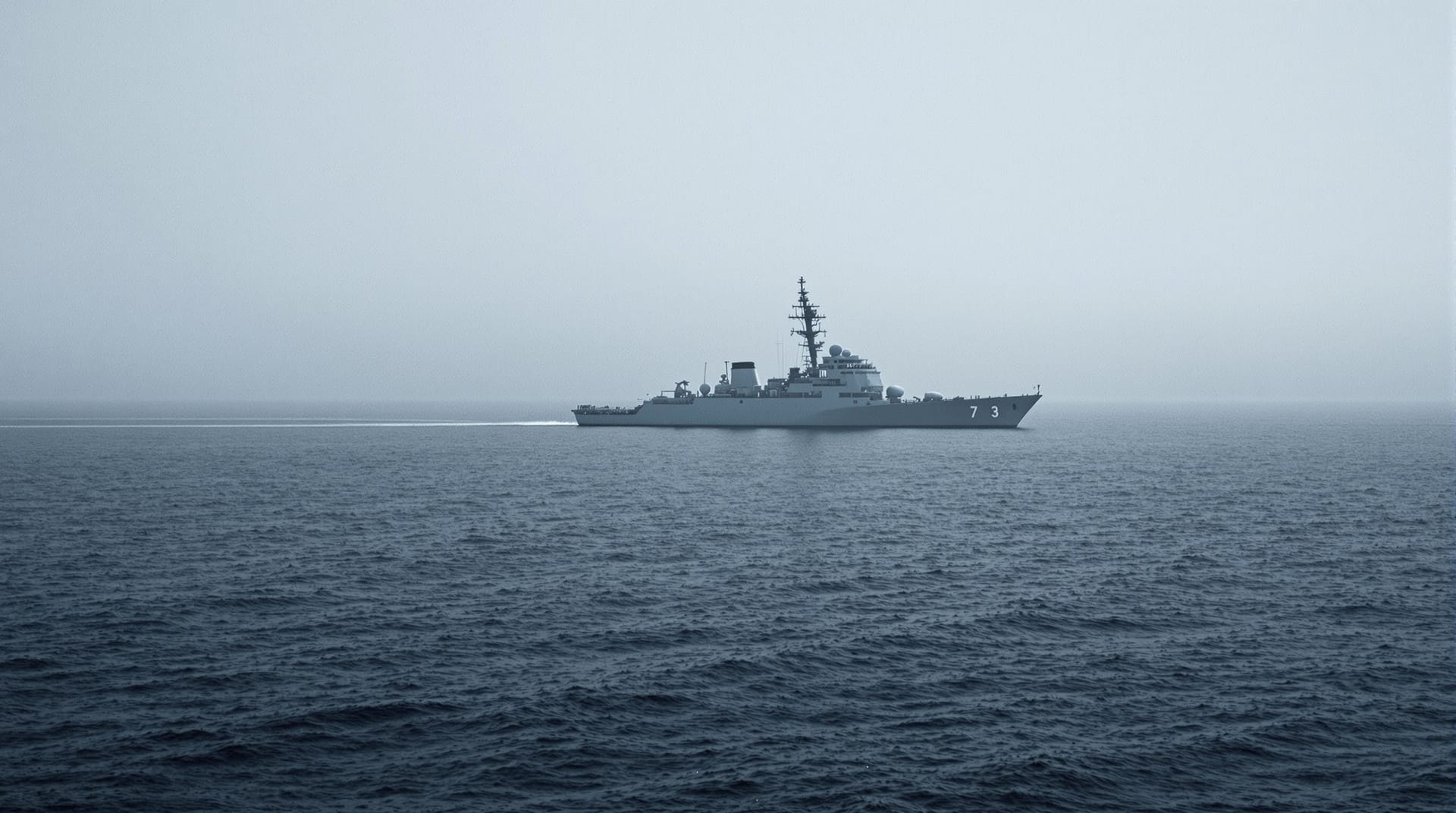
The US Navy has used a laser to shoot down four unmanned aerial vehicles in a test over water, and released silent, unclassified video of the engagement. The comparisons to the missile-defence programmes of the 1980s wrote themselves. The more interesting point is how different this is from those programmes, and why the sea is where directed-energy weapons will be judged first.
Tracking is the hard part
Producing a beam capable of damaging an airframe has not been the limiting problem for some time. Holding that beam on one spot of a moving target for long enough to matter is. A laser does not deliver an impulse the way a shell does; it deposits energy, and the target is defeated when a small area has absorbed enough of it to fail structurally. If the aim point wanders across the airframe, the energy spreads and nothing happens.
That makes the tracking and beam-control system the actual weapon. It has to acquire a small object against sky or sea clutter, predict its motion, and hold a stabilised aim point from a platform that is itself pitching and rolling — while compensating for the way the atmosphere bends and scatters the beam on the way out.
Why a ship
Three reasons, all practical. Ships generate large amounts of electrical power and can be designed to generate more, which matters because a laser's ammunition is electricity. Ships have room and cooling capacity for equipment that no aircraft could carry. And ships face exactly the threat that directed energy answers best: cheap, numerous, small aerial targets, where the cost exchange of firing a million-dollar interceptor at a hobby-scale airframe is unsustainable.
A laser inverts that arithmetic. The marginal cost of a shot is fuel burned to make electricity. A magazine that does not run out, against a threat defined by numbers, is the whole argument.
The limits worth stating plainly
Maritime air is the worst environment for a beam. Humidity, salt haze, fog and turbulence over warm water all absorb and scatter energy, and effective range in clear conditions can collapse in weather that would not trouble a radar-guided missile at all. Line of sight is absolute: a laser cannot shoot over the horizon or through cloud. And a target that spins, is polished, or carries an ablative surface buys itself dwell time.
None of that is disqualifying. It does mean directed energy is a complement to conventional air defence rather than a replacement, and that test results in fair weather off a calm coast are the beginning of an evaluation, not the end of one.
What a "kill" means here
The video shows an airframe catching fire and falling. What it does not show is how long the beam was held on the target, or at what range, or in what atmospheric conditions — and those three numbers are the entire performance envelope. A demonstration is designed to succeed; the useful information is in the parameters, and those are the parameters that are not released.
The physical mechanism is thermal. Energy deposited on a small area of the airframe heats it until a structural member fails, a control surface deforms, or fuel or a battery ignites. Against a thin-skinned target this can take a couple of seconds. Against something hardened, spinning or moving faster it can take long enough that the target completes its attack first.
The cost-exchange argument
The strategic case for directed energy rests entirely on economics. Defending a ship against a saturation attack by small, cheap aerial vehicles using interceptor missiles is a losing trade even when every interceptor works: the attacker spends thousands per unit, the defender spends millions, and the defender's magazine has a hard floor set by how many cells the ship carries.
A laser changes both terms. The magazine is bounded by generator capacity rather than cell count, and the marginal cost of a shot is fuel. If the engineering delivers, the threat that currently looks unanswerable becomes the threat the system is best against — which is why the funding survives the technology's very long development history.
What to watch next
Engagement ranges in poor visibility; the power and cooling load an operational system imposes on a warship's engineering plant; and whether the system moves from a test article into a deployed fit. Naval science and technology programmes are described by the Office of Naval Research, and the electrical-power research that underpins them is documented by the US Department of Energy.