New Capping Effort Planned for Gulf Spill
Filed 10 July 2010 — Gulf of Mexico
Engineers working the blown-out well in the Gulf of Mexico moved this weekend to replace the loose containment cap that has been funnelling part of the flow to the surface with a far heavier assembly designed to do something the response has not yet managed in eighty days: close the well.
The operation begins by removing the existing cap, which means that for a period measured in days the well will flow entirely unrestricted into the water — a deliberate worsening accepted in exchange for the chance of a permanent stop.
Why the first cap was never a solution
The cap installed in early June sat over the cut riser and captured oil into a surface vessel. It was always a partial measure. It leaked around the seal by design, because a loose fit was the only thing that could be landed quickly on a sheared, damaged pipe. Its capacity was set by how fast the ships above could process what came up, and when the weather forced those ships off station the collection stopped.
The replacement is a different object: a sealing stack with closing rams that can be bolted down and shut, holding pressure rather than merely channelling flow.
The pressure test is the real experiment
Once the new stack is landed and closed, the diagnostic that matters is the pressure reading inside the well. High and steady pressure means the well bore below is intact and the seal is holding everything in. Low or falling pressure suggests oil is escaping somewhere below the seabed — through damaged casing into the surrounding rock — and that is the scenario nobody wants, because a well leaking underground cannot be capped from above at all.
That test, not the mechanical fit of the hardware, is what determines whether the well can be shut in and left shut until the relief wells arrive.
Relief wells remain the answer
Two relief wells have been drilling since May. Their purpose is to intercept the original bore thousands of feet below the seabed and kill it with heavy mud and cement from below. That is the permanent fix, and everything happening at the seabed is a holding action until it lands. Interception of a target a fraction of a metre wide, several kilometres down, is slow and unforgiving work.
Above the waterline
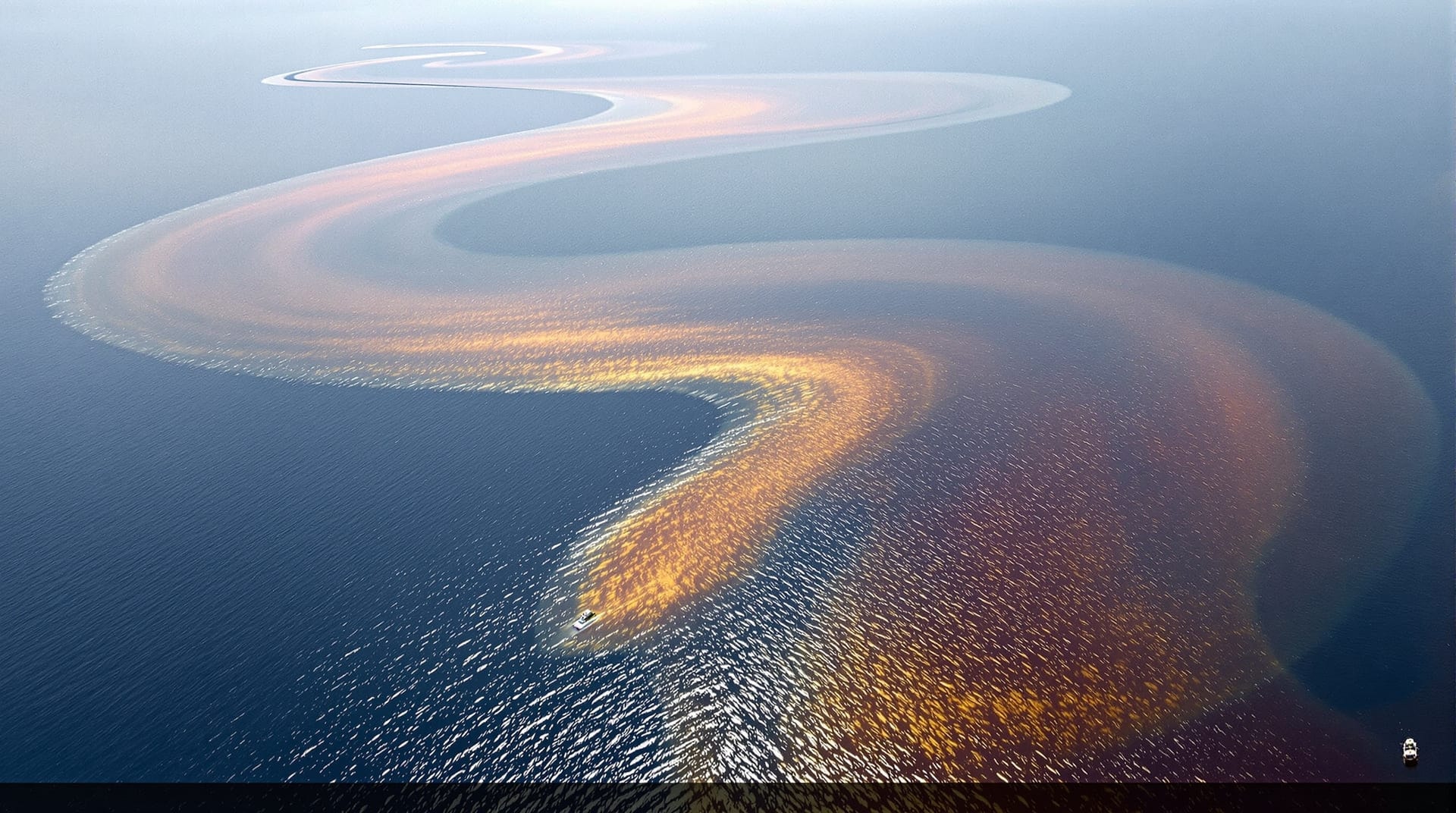
Whatever happens at the wellhead, the surface and shoreline problem persists. Oil already released is weathering into emulsion and tar, moving with wind and current across marsh, barrier island and beach. Fisheries across a large part of the Gulf remain closed. The ecological accounting will be run over seasons and years, not weeks, and the first honest measurements of damage to spawning grounds and marsh will not exist until well after the well is dead.
Why this took eighty days
The delay is worth explaining, because it was not primarily a failure of urgency. Everything at the wellhead happens a mile beneath the surface, in near-freezing water, at pressures that crush conventional equipment, with no human present. Every operation is performed by remotely operated vehicles guided from ships above, and each attempt takes days to stage and days to reverse.
Several earlier interventions failed for reasons specific to that environment. A containment dome filled with gas hydrates — ice-like crystals that form when gas meets cold water under pressure — and floated instead of sealing. An attempt to force heavy mud down into the well was abandoned when it became clear the pressure was pushing back harder than the pumps could push. Each failure consumed a fortnight and taught something that shaped the next attempt.
The regulatory aftershock
Running alongside the engineering is a policy consequence already visible: a moratorium on new deepwater permits, a restructuring of the agency that both promoted and policed offshore drilling, and a rewriting of well-control and blowout-preventer standards. Separating the promotion of resource extraction from its regulation is the structural lesson most jurisdictions eventually draw from an incident of this kind, usually after rather than before.
What to watch next
The pressure reading after shut-in; whether the seal holds through the first summer storm; and the relief-well intercept depth reported each week. Offshore drilling safety regulation and post-incident reform are documented by the Bureau of Safety and Environmental Enforcement, and the shoreline and water-quality response framework is set out by the US Environmental Protection Agency.