India: Protestors Blocked Railway Services on Monday in Protest Against a Price Rise in Gas and Inflation
Filed 7 July 2010 — New Delhi
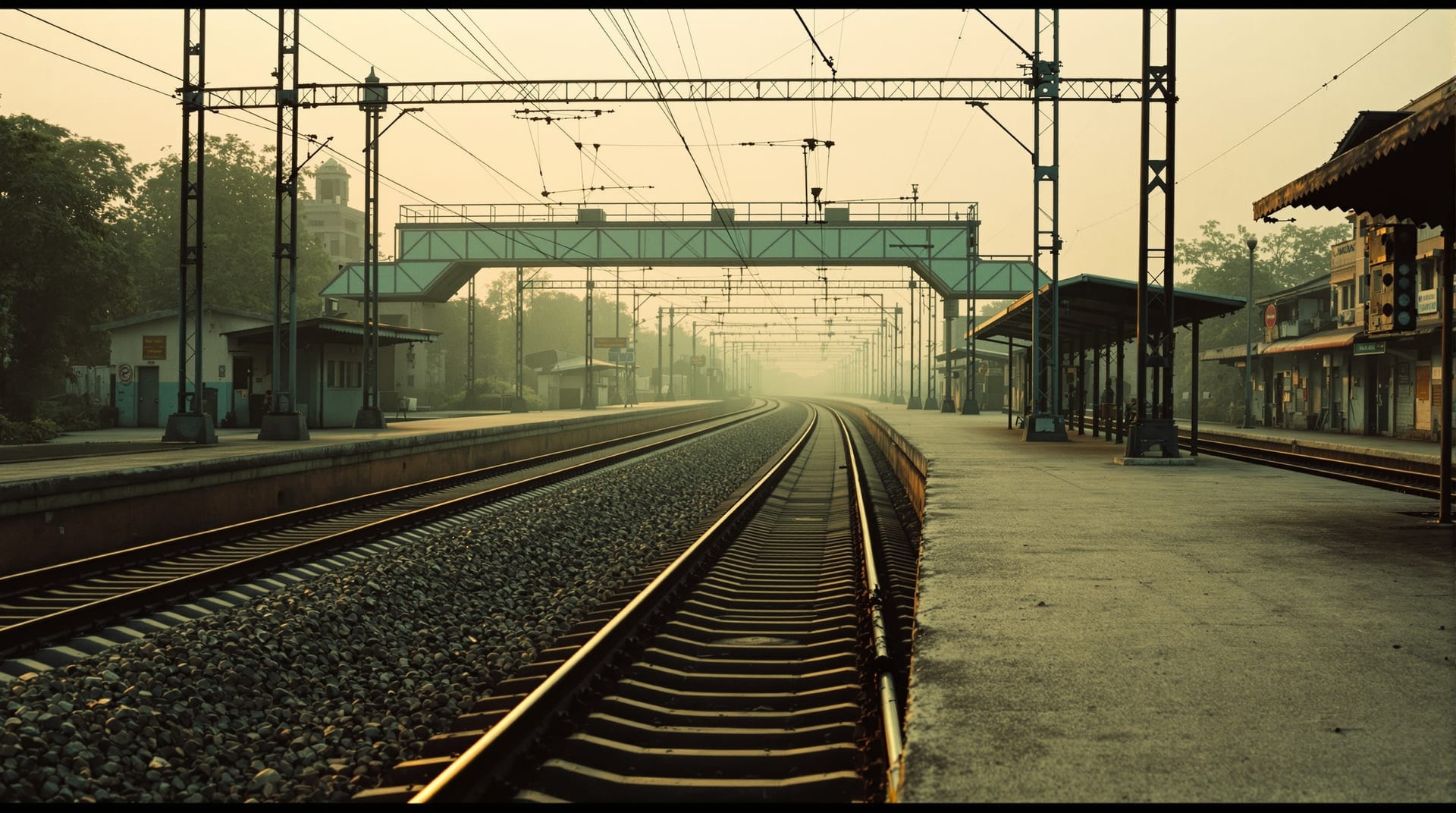
India spent Monday largely stationary. A nationwide general strike called by opposition parties and backed by the major trade union federations stopped suburban and long-distance rail services, closed markets in several states, kept buses in their depots and left commuters walking. Protesters sat on the tracks at junctions across the north and east; where they sat, nothing moved.
The trigger was fuel. Weeks earlier the government had ended decades of administered pricing on petrol, allowing pump prices to follow the international crude market, and had raised the controlled prices of diesel, kerosene and cooking gas at the same time. In a country where kerosene lights homes without power and subsidised cooking gas is a household staple, that is not an abstract reform.
The arithmetic behind the anger
Deregulation arrived in the middle of an inflation problem that was already politically dangerous. Food price inflation had been running in double digits for months. Pulses, sugar, milk and vegetables — the components that dominate a low-income household budget — had risen fastest, which meant the measured average understated the pain for the people feeling it most.
Fuel policy and food policy are linked in India more tightly than in most economies. Diesel moves grain from surplus states to deficit ones, runs the irrigation pumps in fields without reliable electricity, and powers the generators that keep small workshops alive through outages. Raise diesel and the increase propagates through the whole price structure within weeks.
The government's case
The argument for deregulation was fiscal, and it was not frivolous. Holding pump prices below import cost forces the state to compensate the refiners, and that subsidy bill had been expanding with every rise in crude. Money spent capping the price of fuel is money not spent on the roads, ports and power capacity that would raise incomes over a longer horizon — and a subsidy applied at the pump is captured disproportionately by the households that own vehicles.
The counter-argument is about sequencing rather than principle. Removing a price cap during a food-inflation spike loads two shocks onto the same household in the same quarter, and the case for reform is hardest to make precisely when the reform bites hardest.
A strike as an instrument
The general strike is a well-worn instrument in Indian politics and its effects are measured in days rather than years. Trains were running again by Tuesday. What such a day does establish is the political ceiling on how far and how fast a price reform can be pushed, and how much of the opposition is willing to coordinate across ideological lines to enforce that ceiling.
The immediate economic cost — a lost day of freight, retail and manufacturing across a large economy — is real but recoverable. The durable consequence is the signal it sends to the next set of ministers weighing the same decision.
Who actually pays a subsidy
The distributional argument deserves more space than it usually gets, because it cuts in both directions. A universal fuel subsidy is regressive in the obvious sense: the household that consumes the most petrol receives the largest transfer, and that household owns a car. On that measure, removing the cap and redirecting the money is straightforwardly progressive.
But the subsidies at issue were not uniform. Kerosene and cooking gas are consumed overwhelmingly by households at the bottom of the distribution, many of them off the electricity grid entirely, and raising those prices is regressive by exactly the same logic. Treating a subsidy package as a single object obscures the fact that its components fall on completely different populations.
The technically superior answer — cash transfers targeted at identified households, with prices left to the market — requires an identification system, a payment rail and an administrative apparatus capable of reaching several hundred million people. In 2010 that infrastructure was under construction rather than in service, which is why the argument kept returning to the price at the pump.
What to watch next
Whether the fuel increases are partially rolled back, whether the monetary authority tightens further to attack the inflation directly, and whether the monsoon delivers a harvest good enough to take the heat out of food prices without any policy intervention at all. Monetary policy statements and the underlying inflation series are published by the Reserve Bank of India, and the trade-policy context for agricultural pricing is set out by the World Trade Organization.