Chinese Court Sentences US Geologist to 8 Years
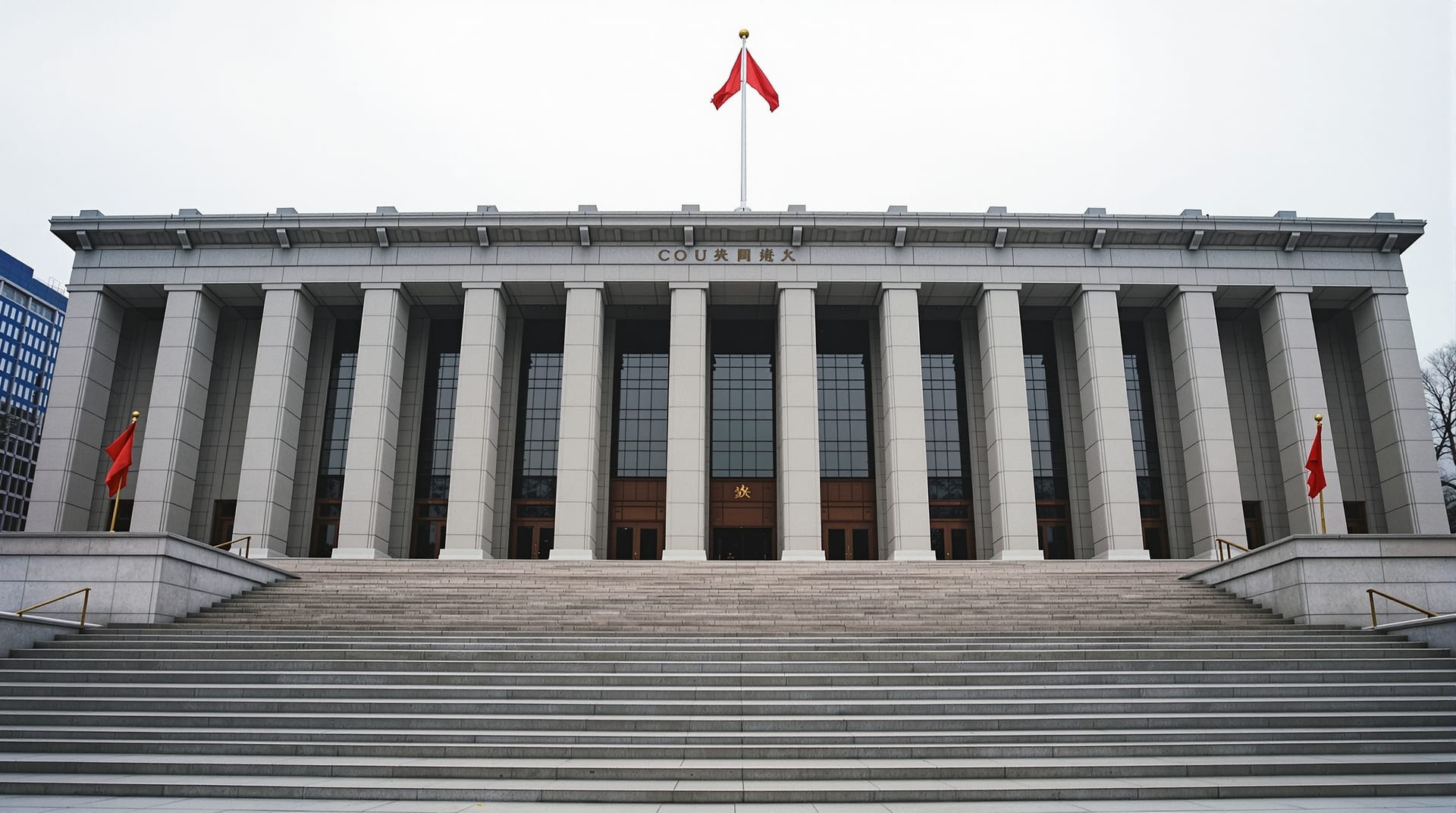
Filed 5 July 2010 — Beijing
A Beijing court has sentenced an American geologist to eight years in prison for gathering data about the Chinese oil industry, closing a case that had been sitting in pre-trial limbo for more than two and a half years. The verdict, delivered by the Beijing No. 1 Intermediate People's Court, found him guilty of spying and of collecting state secrets, and stated that his actions had endangered national security.
The material at the centre of the case was not a weapons design or a diplomatic cable. It was a commercial database: geological reports on onshore oil wells, and a set of coordinates for tens of thousands of oil and gas wells operated by the country's largest state energy producer. That information had been bought and passed to the American energy-consulting firm that employed him. What made it criminal was not the act of buying it but a decision, taken later, that the data belonged in a protected category.
A sentence near the ceiling
Eight years is close to the ten-year limit that Chinese sentencing practice reserves for all but the gravest violations of the state-secrets statutes. Observers in the courtroom described the geologist, a naturalised American in his mid-forties with a reputation as a meticulous researcher, as showing no visible reaction as the verdict was read. His sister, the only family member permitted inside, was not so composed. His wife, reached at the family home in suburban Texas where she was raising their two children, said only that the outcome was unacceptable.
The United States ambassador to China attended the hearing in person. That is an unusual step, and a deliberate one: an ambassador in the public gallery is a signal to the host government that a case is being watched at the highest level. He left without speaking to reporters.
Why the state-secrets question matters beyond one man
The reason this case attracted attention far outside the small world of energy consultancy is that it did not turn on espionage in any conventional sense. It turned on classification — specifically, on the ability of the state to decide after the fact that a body of commercial information was secret all along.
Geological survey data is the raw material of the global energy business. Well coordinates, reservoir depths, production histories: consultancies buy it, aggregate it, and sell the resulting analysis to investors, insurers and rival producers. Every major oil-producing country generates it, and in most of them a large part of it is public by design, because open reserve data is what allows capital markets to price energy risk at all.
When the same category of information is retroactively classified, three things follow. Foreign firms lose the ability to know in advance which research is lawful. Domestic researchers face the same uncertainty and respond by publishing less. And the practical cost of doing business rises for everyone, because risk that cannot be defined cannot be priced.
The wider pattern in 2010
This verdict lands in a year when the boundary between commercial intelligence and state security has been tested repeatedly. Multinational firms operating in China have found that due diligence — the ordinary work of checking who owns an asset, what a plant produces, how much a field yields — can be reclassified as intelligence gathering depending on who is asking and what the political weather is.
None of that makes the outcome for one family less concrete. A man who moved to the United States, took citizenship, built a career reading rock formations and returned to the country of his birth on a business trip will spend the better part of a decade in prison over a database.
What to watch next
Three things are worth following. First, whether an appeal is lodged and whether it is heard on the classification question rather than on the facts. Second, whether consular access continues at the same frequency once the case leaves the news cycle — attention tends to be the only reliable guarantor of access. Third, whether other detentions follow the same template, which would suggest a settled policy rather than a single prosecution.
Reporting on detentions of this kind is documented in detail by Human Rights Watch, whose country files track the use of vaguely drafted security offences, and consular-protection practice is set out by the UN Human Rights Office.